
I had too many comic books.
Not just more than I could read. I had enough short boxes to fill an entire room. The boxes were stacked and buried so deeply that some of the books might as well not have been there. Even if I suddenly wanted to read one of them, there was no guarantee I could reach it without moving half the room first.
Eventually, I had to be honest with myself.
If I could not put my hands on a book at a moment's notice, how much was I really enjoying owning it?
That was the original plan behind Next Level Collectibles: sell the books I no longer wanted and make the collection manageable again.
I was not trying to create a business. I definitely was not planning to build software.
I just wanted my collection to feel like a collection again instead of storage.
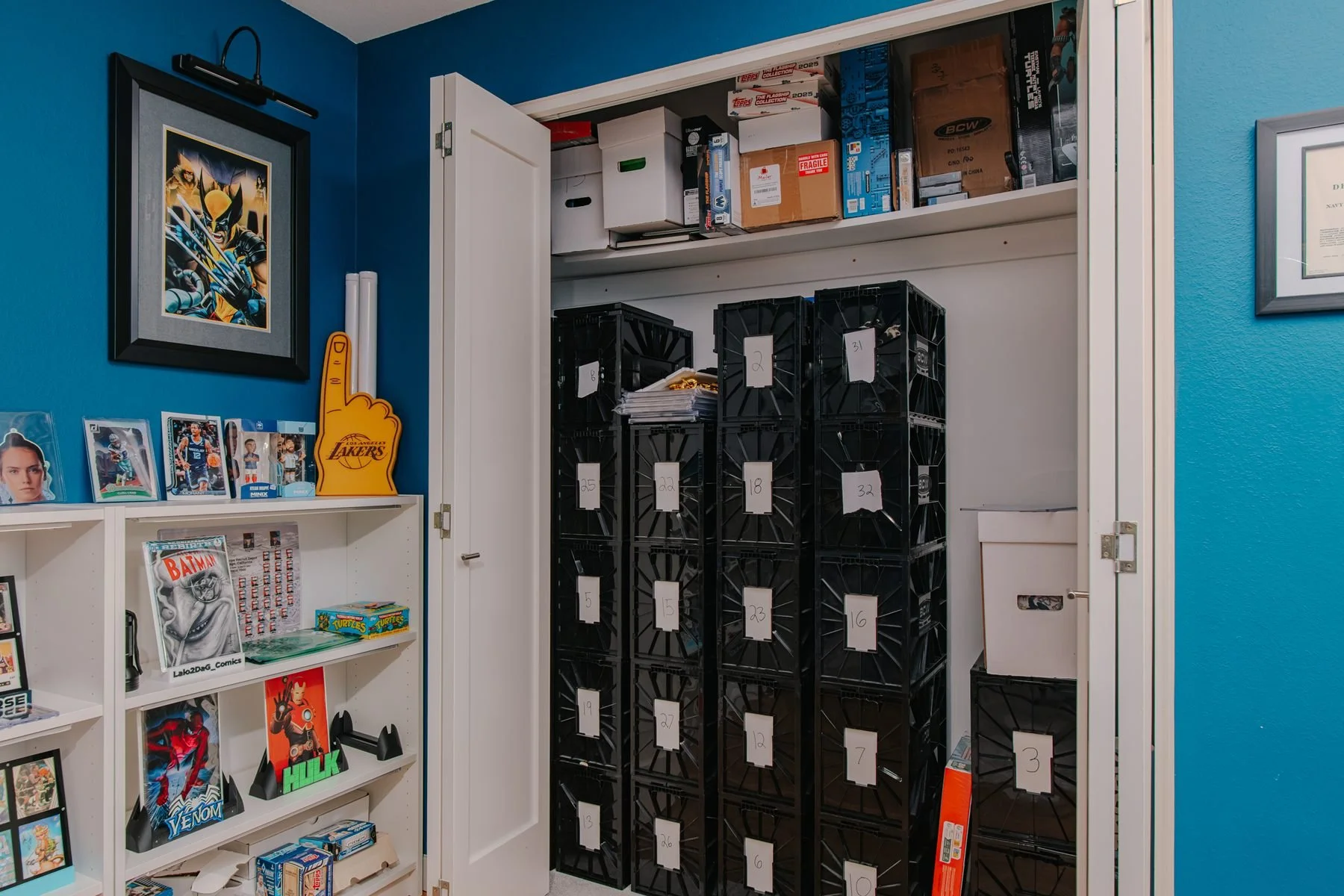
This was the problem I was trying to solve: comic books stacked high enough that getting to some of them meant moving everything else first.
Keeping what I truly love
Comic books were only part of it.
I also collect sports cards, especially basketball. I am a huge NBA fan, and basketball cards have always been the center of that side of my collection.
But I eventually had to ask myself the same question about the cards. I owned a lot of them, but I only felt strongly connected to a smaller group—mainly my Kobe Bryant cards, along with LeBron James and a few other players.
If I was already going to sell some comics, I thought I might as well sell some cards too.
At first, I planned to move slowly. I would list what I no longer wanted, keep the things I truly loved, and gradually make the collection smaller. Over time, though, I began to realize I was ready to part with more than I originally expected.
The idea of a smaller personal collection started to appeal to me: fewer things, but things I would actually enjoy seeing every day.
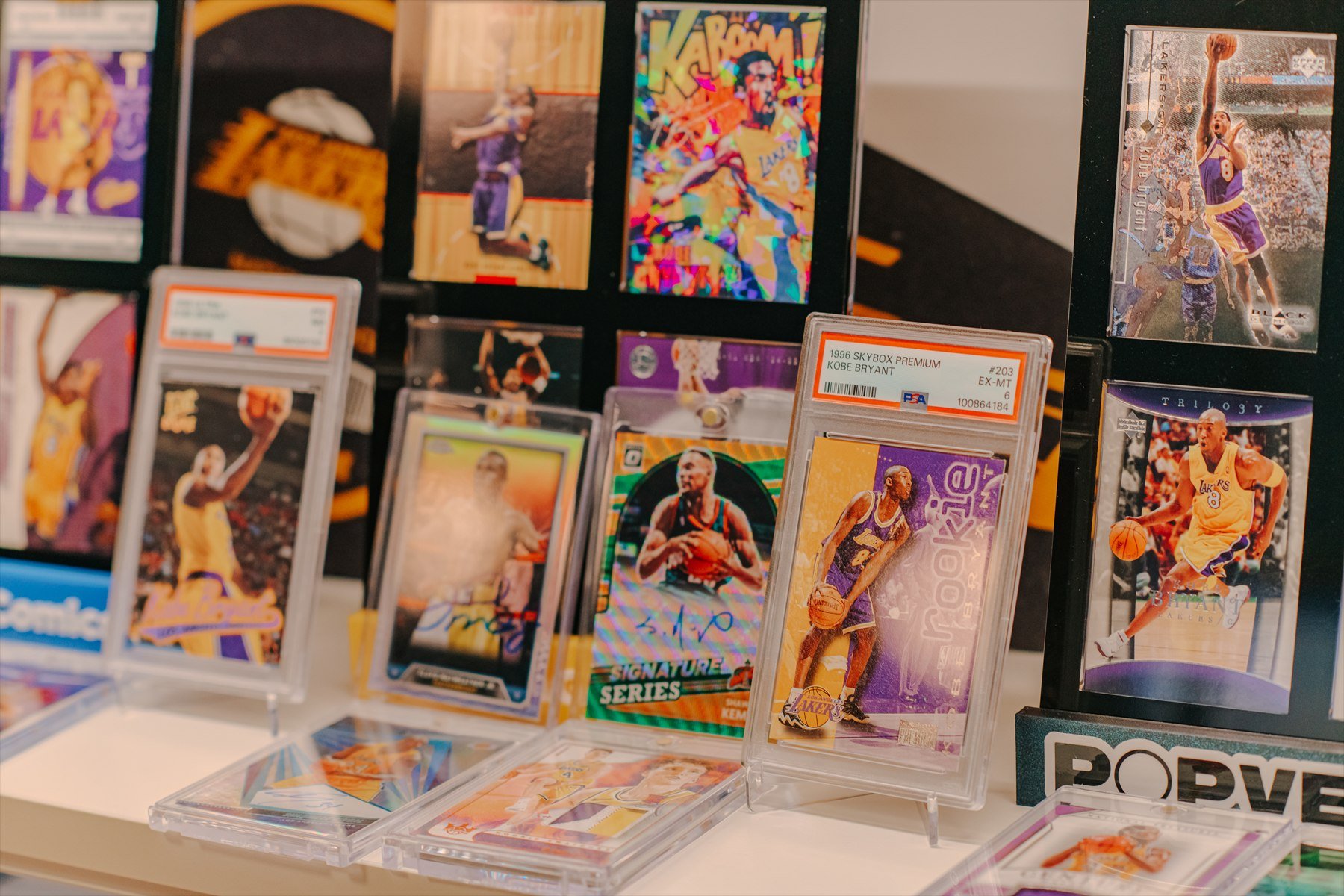
A smaller personal collection made more sense to me—fewer pieces, but pieces I would genuinely enjoy seeing every day.
“That sounds like a business”
I mentioned my plan to the owner of my local comic shop.
After I explained what I wanted to do, he told me, “That sounds like a business.”
I went home and told my wife. She said the same thing.
I had never run a business, and setting one up sounded much more complicated than anything I knew how to do. My wife told me it was not as difficult as I imagined. The more I thought about it, the more exciting it became.
So I decided to go for it.
I still took my time. I thought about when I should begin, where I would sell, how I would list things, what kind of seller I wanted to be, and how the business would fit into the rest of my life.
One decision led to another, and eventually the idea of selling a few extra books became Next Level Collectibles.
The hardest part was supposed to be the easiest
The plan sounded simple: sell what I did not want.
That turned out to be one of the hardest parts.
Sometimes I pull a comic from a box, look at the cover, remember the story inside, and immediately repent. I set it aside because I am no longer sure I want to sell it.
Then, sometimes, I list it later anyway.
Comic books have a special hold on me. The cover art, the characters, the history, and the stories make them difficult to treat as ordinary inventory. Sports cards have generally been easier for me to let go, although there are still players and individual cards that will always feel personal.
That tension is still part of the business. I am trying to reduce the collection while remaining a collector at heart.
I do not want to be only a seller
As the business became more serious, I realized I did not want to be someone who simply moved products—or what some collectors might call a flipper.
I genuinely enjoy the comic-book and sports-card communities. I want to participate in them, learn from them, and provide good books and cards to people who will appreciate them.
I do not want the business to be built around taking advantage of a moment or chasing whatever happens to be hot. I want it to reflect the reasons I collected in the first place.
That means actual-item photos, careful handling, accurate descriptions, secure packaging, and making decisions with the collector on the other side of the order in mind.
I did not plan the system
When friends or family ask how the business is going, I sometimes explain the system I have built. They often seem impressed by it.
From my perspective, it does not always feel that impressive. It feels like a series of problems I had to solve.
I needed a faster way to photograph cards. Then I needed a faster way to create listings. Then I needed to connect those images to the correct spreadsheet rows. Then I needed permanent item identities, consistent information, inventory records, review tools, marketplace safeguards, and ways to recover when something failed.
I did not sit down one day and design the entire architecture.
One problem exposed the next one. Each solution worked for a while, revealed a new complication, and pushed the system forward.
Eventually, those individual fixes became something much larger than I originally intended to build.
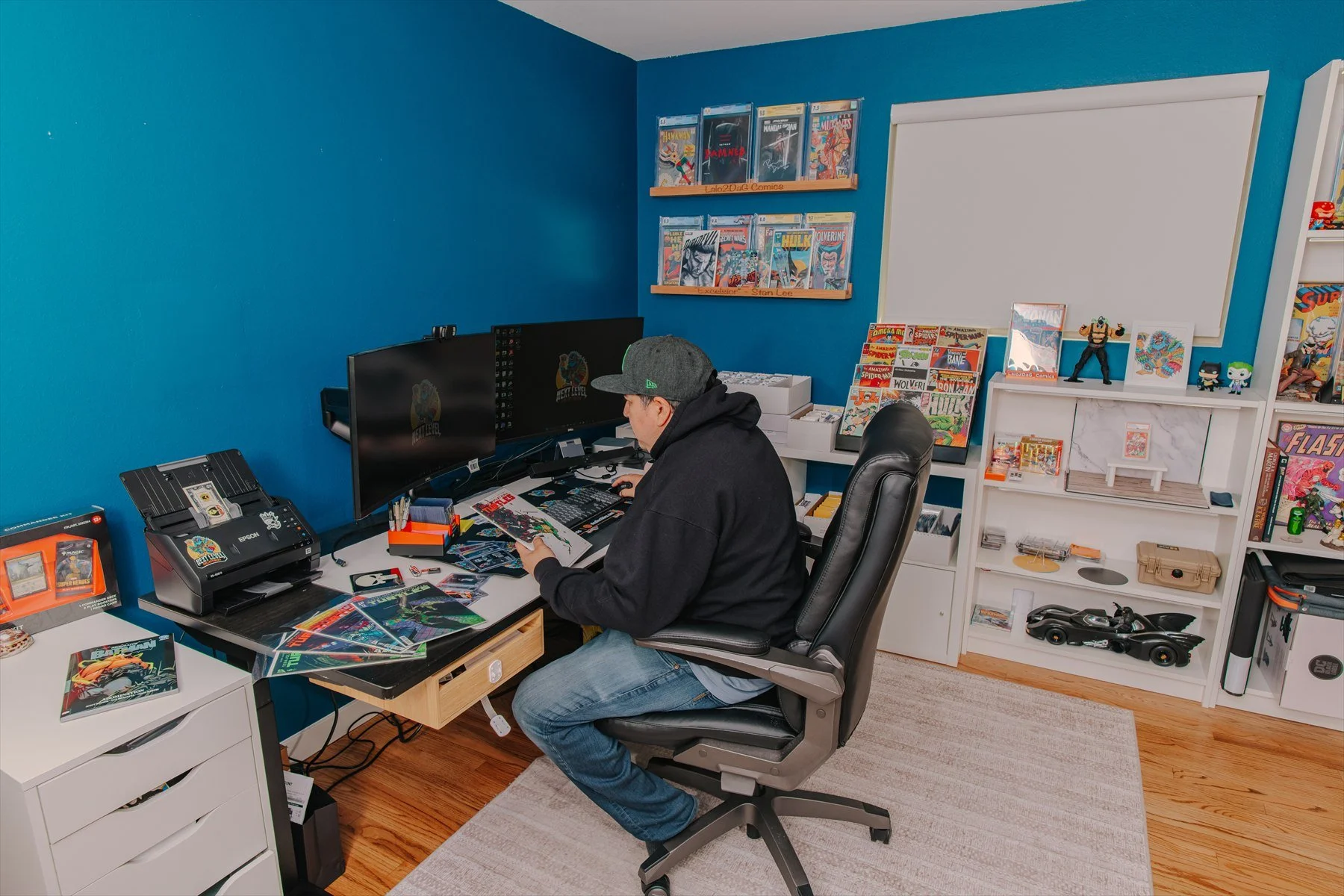
I did not design the whole system at once. I kept solving one problem, then the next.
Where AI helped—and where it did not
AI has been useful throughout this project, and I use it often. It can help analyze images, organize information, reduce repetitive work, research possibilities, and turn an idea into something testable much faster than I could manage alone.
But AI by itself did not solve these problems.
Collectibles contain too many small distinctions: similar cards, different parallels, subtle finishes, changing marketplace requirements, subjective condition decisions, and business rules that depend on the physical item in front of me.
My knowledge of the field matters. So does my willingness to test, refine, and engineer the workflow around the way I actually work.
Commercial bulk-listing services can be useful, but they are designed around someone else's process. What I value about my system is that it is personal. I decide how it works, where human review is required, what should be automated, and what needs to change.
AI has made it possible for an individual seller to build tools that once would have felt out of reach. It has not replaced the collector knowledge or judgment needed to make those tools useful.
Why I am documenting the journey
For a while, I thought maybe I should build something and try to sell it.
That did not feel like me.
What I want is to share what I have made with the community. Maybe someone else has encountered a similar problem and finds part of my solution useful. Maybe someone solves the same problem in a completely different way. Maybe the process is simply entertaining to follow.
I am not presenting my system as the correct way to run a collectibles business. It is simply the system that grew out of my collection, my decisions, and the problems I encountered along the way.
That is what this series will document: not a set of instructions, but the story of how one collector kept solving problems until those solutions became a system.
Where the story begins
The first workflow problem appeared before the eBay spreadsheet.
I was photographing sports cards with my iPhone and uploading the pictures to eBay one listing at a time. It worked, but it was slow, repetitive, and difficult to scale across a stack of cards.
I needed a faster way to capture consistent front-and-back images.
That search led me to a scanner—and to the first story in this series.
Have you ever looked at your collection and realized that it had grown beyond your ability to enjoy it? What did you decide to keep, and what finally made you ready to let something go?
If you are curious about the books and cards I have decided to let go, you can browse the Next Level Marketplace. If you would rather follow the next problem as I solve it, you can join Next Level News.
